Skip to the content
Armand Meintjes Buy Almost

Armand Meintjes

About the Author & Contact

The person behind the story, and how to reach him.

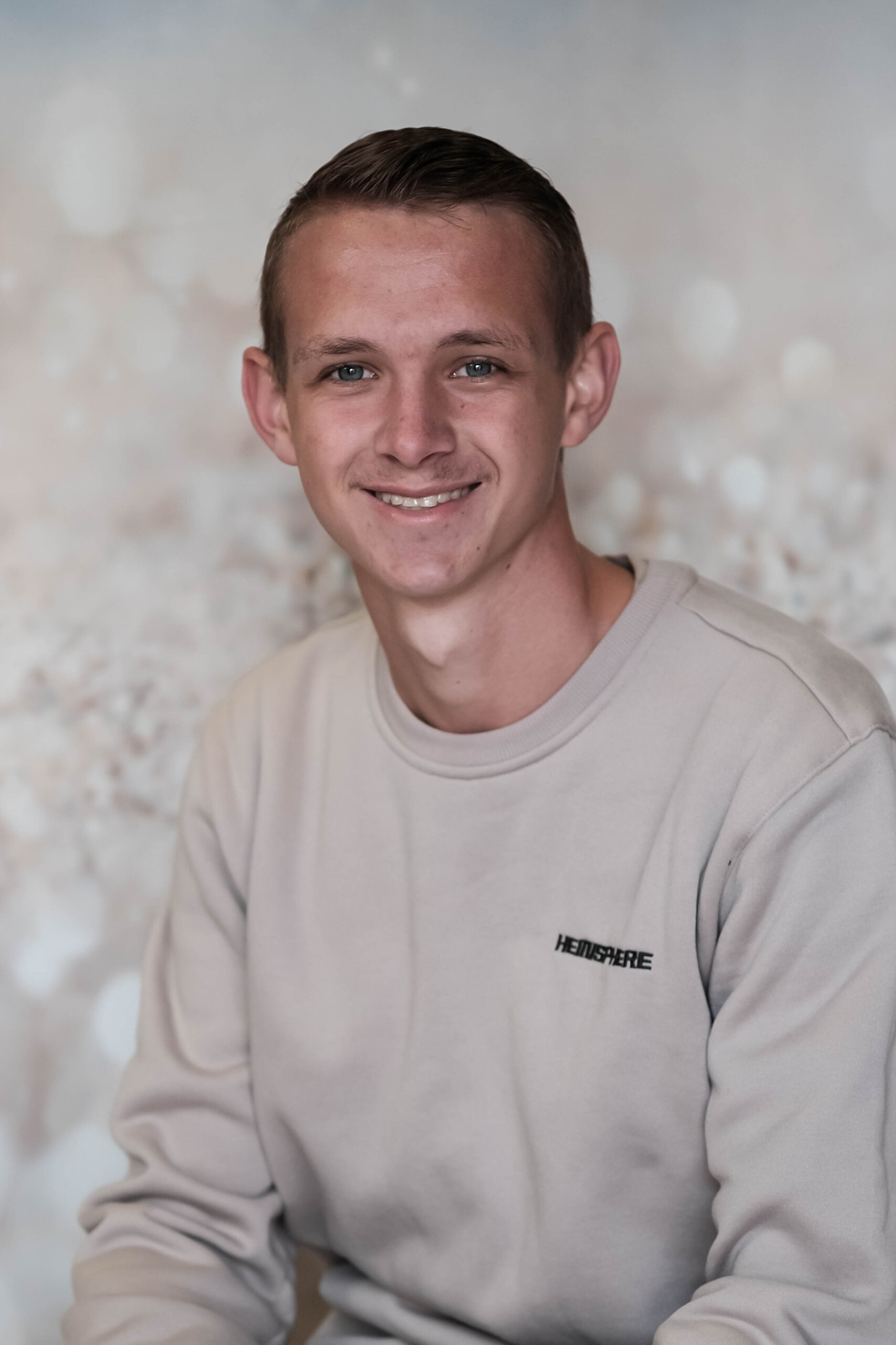
Portrait of South African author Armand Meintjes
Armand Meintjes, South Africa

Meet Armand

Armand Meintjes is a 20-year-old author and creative from South Africa. He began writing at 18, and Almost is his debut novel.

Almost grew out of a wish to take personal experiences and emotions and turn them into fiction. Writing became a way to explore feelings that can be hard to explain in real life: the kind you carry around long before you find the words for them.

He started Almost as a way of putting complicated emotions into words. It became a story about two boys, Jamie and Ethan, and the space between friendship and something more.

Armand is a young writer at the beginning of his journey, and Almost is the first story he is sharing with the world.

  1. 2024 Started creating and developing creative projects under Emberlight Studios.
  2. 2026 Almost completed and prepared for publication.
  3. 31 January 2027 Almost officially releases.
  4. Future More stories to come.

Dear Reader,

Almost is inspired by real events and emotions from my own life. Some names, places and details have been changed, but the feelings behind the story are real.

I wrote this story because sometimes there are things you cannot say out loud, but you can write them down.

Almost became a place where I could explore the things I was feeling, the questions I was asking and the kind of love I was trying to understand.

If you have ever felt like you were too much, not enough, different, confused, lonely, or simply waiting for something that might never happen, I hope you find something of yourself in these pages.

And if you are currently living in your own "almost," I hope you remember that your story is not over.

Page 1 of 15

Behind the Story
Every story has a story of its own.
Before Almost became a book, before Jamie and Ethan became characters on a page, and before I ever imagined sharing this story with readers, it was simply something I wanted to write. What started as a personal writing project eventually became a much bigger journey, one that involved returning to an unfinished manuscript, looking at the story with fresh eyes, and deciding that it was something worth completing.
I didn't begin writing Almost with a perfect plan or a clear picture of what the finished book would look like. I started with ideas, emotions, experiences, and questions that I wanted to explore. Some came from things I had experienced myself, some from relationships and moments that had stayed with me, and others from simply observing the world around me. Over time, those different influences began to come together in the form of a story.
This page is about that journey. It's about where Almost began, the experiences and emotions that helped shape it, the characters who brought it to life, and what it has meant to turn something so personal into a story I can eventually share with other people.

Page 2 of 15

It Started in Matric
I first started writing Almost during my matric year. At that point in my life, I wasn't necessarily thinking about becoming a published author or imagining that one day people would be able to read my work. I was simply writing because there were things I wanted to express and emotions I wanted to explore. I didn't have every part of the story figured out, but I had enough of an idea to begin putting words on a page.
The manuscript originally had a different title: Unspoken Truths. Looking back, I think that title reflected an important part of what I was trying to explore. There are things people don't always know how to say, feelings that remain hidden, and experiences that can be difficult to explain to someone else. Sometimes, you know what you're feeling but don't know how to communicate it. Other times, you are still trying to understand those feelings yourself.
Writing gave me somewhere to explore those ideas. Instead of needing to explain everything directly, I could create characters and let them experience situations that allowed me to examine different emotions and perspectives. I could build conversations, relationships, and moments around the things I wanted to explore, without needing every part of the story to mirror real life exactly.
At the time, I didn't know precisely where the manuscript would lead me. I was learning as I went, developing the characters and discovering the story along the way. I wasn't starting with a finished novel in mind so much as giving an idea the opportunity to become something more.

Page 3 of 15

Where the Inspiration Really Came From
The inspiration behind Almost didn't come from one particular event or one person. It came from a combination of experiences, emotions, relationships, memories, and observations that had stayed with me. Some of those influences were personal, while others came from watching how people interact, thinking about the things they struggle to say, and trying to understand why certain moments can affect us long after they have passed.
Life doesn't always give us clear explanations for the things we experience. Sometimes, relationships leave us with unanswered questions. Sometimes, we find ourselves dealing with emotions we don't fully understand, or we look back on a situation and realise that it affected us more deeply than we initially thought. There are also moments when we wish we had said something differently, acted differently, or understood something sooner. Those experiences can stay with us, gradually becoming part of the way we see the world.
I wanted to explore some of those feelings through fiction. Rather than writing a direct account of my own life, I brought different influences together and allowed them to become part of a story with its own characters, circumstances, and direction. Certain emotions came from things I understood personally, while other parts developed through imagination and the decisions I made as the story grew.
I think that is one of the things I find most interesting about writing. Inspiration isn't always something you can point to and say, "This exact moment is where everything began." Sometimes, a story develops from a collection of smaller things that eventually come together. You might recognise where a particular emotion originated, but the character, the scene, and the circumstances surrounding it can become something entirely different.
That is how I see Almost. It is fiction, but it wasn't created in a vacuum. Real feelings and experiences helped inspire it, and imagination allowed me to turn those influences into a story that could stand on its own.
Page 4 of 15

The Feelings Behind the Pages
One of the things I wanted to explore in Almost was the difference between what people see on the outside and what someone might be experiencing privately. We often make assumptions about others based on how they behave around us. Someone can laugh, make jokes, spend time with friends, and appear to be doing well while dealing with thoughts and emotions that nobody else knows about.
I find that contrast important because not every struggle is visible. Sometimes, people don't speak about what they're experiencing because they don't know how to explain it, because they are afraid of being misunderstood, or because they aren't ready to share it. Other times, they might not even realise how much they are carrying until something makes them stop and think about it.
Through Almost, I wanted to make room for those quieter experiences. The uncertainty that comes with growing up, the difficulty of understanding yourself, the fear of not being accepted, and the desire to find people who genuinely understand you are all emotions that can be difficult to put into words. They aren't always dramatic or obvious. Sometimes, they appear in ordinary conversations, in moments of hesitation, or in the things a person chooses not to say.
My own experiences helped me understand some of these feelings, but writing about them through fiction allowed me to explore them from different perspectives. I could give a character a particular fear or uncertainty and then consider how that feeling might affect their decisions, their relationships, and the way they see themselves.
I didn't want the story to pretend that difficult emotions always have simple solutions. Sometimes, understanding yourself takes time. Sometimes, other people don't understand you immediately. And sometimes, you have to keep moving forward without knowing exactly how everything will turn out. Those uncertainties are part of life, and I wanted the emotional world of Almost to reflect that.

Page 5 of 15

Why I Chose to Tell This Story Through Fiction
Although parts of Almost were inspired by my own experiences, I never wanted the book to become a straightforward retelling of my life. Fiction gave me the freedom to take emotions I understood and explore them in situations I could develop myself. I could change details, combine different influences, and create characters whose experiences were not limited to what had happened in my own world.
That distinction matters to me. A fictional story can be emotionally honest without every event being real. A character can experience a feeling that I recognise without being a direct representation of me, and a scene can capture something meaningful without having happened exactly as it appears on the page.
Names, details, and circumstances in Almost have been changed, and the story contains fictional elements of its own. Some characters and situations may draw inspiration from real people or experiences, but they have been developed as part of a fictional narrative. The book should be understood as a novel shaped by personal inspiration and imagination, rather than as a record of actual events.
Writing this way also allowed me to explore possibilities. I could ask what might happen if a character made a different decision, how a conversation might unfold under different circumstances, or how someone might react when faced with a situation they had never experienced before. Those questions became part of the creative process and helped the story develop beyond its original inspiration.
Ultimately, I wanted to create something that could mean something to readers in their own lives, even if they had never experienced the same circumstances that inspired me.

Page 6 of 15

Jamie Carter and the Heart of the Story
Jamie Carter is at the centre of Almost, and creating him meant thinking about what it feels like to grow up while trying to understand yourself and the world around you. I wanted him to feel like a real person rather than a character who always knows what to say or makes the right decision. He has his own thoughts, fears, uncertainties, and hopes, and those things influence how he experiences the people and situations around him.
Part of Jamie's journey involves navigating emotions that aren't always easy to understand. Growing up can be complicated enough without feeling uncertain about where you belong or how other people see you. Sometimes, you want to be understood but don't know how to explain yourself. Sometimes, you hope for something while worrying about what might happen if things don't work out the way you imagined.
Those are the kinds of experiences I wanted to explore through him. His story isn't intended to represent everyone who has struggled with their identity, relationships, or emotions, but I hope readers who recognise some of those feelings will find parts of his journey relatable.
Jamie is a fictional character, and his life is not a direct copy of mine. However, the emotions that helped shape him are connected to things I understand personally. Giving those feelings to a character allowed me to explore them through a different perspective and develop them into a story with its own meaning.
What mattered most to me was making Jamie feel believable. I wanted readers to understand that he is more than the things he struggles with. He has his own personality, relationships, hopes, and experiences, and his journey is about more than any single challenge he faces.

Page 7 of 15

Ethan and the Things We Don't Always See
Ethan brings a different energy to Almost. He has warmth, humour, and an easygoing side that influences how he interacts with the people around him. However, I didn't want his outward personality to tell readers everything there was to know about him. Like everyone else in the story, he has his own perspective, uncertainties, and experiences that help shape who he is.
One of the things I wanted to explore through Ethan was the idea that people can be more complicated than they first appear. We often get to know someone through the version of themselves they show to the world. We see how they behave, what they say, and how they make us feel, but we don't automatically understand everything happening inside their minds.
Relationships can make that even more complicated. Two people can experience the same interaction differently, interpret the same conversation in different ways, or struggle to communicate what they actually mean. Sometimes, what seems obvious to one person is confusing to another, and sometimes, understanding another person requires patience rather than assumptions.
Ethan's role in the story gave me an opportunity to explore those differences and the uncertainty that can exist between people. He isn't simply there to provide another perspective on Jamie's experiences; he is a character with his own personality and his own place in the story.
Together, Jamie and Ethan help explore the complicated space between what we feel, what we understand, and what we are able to communicate. Their experiences are fictional, but the emotions that shape their interactions are ones many readers may recognise in their own relationships.

Page 8 of 15

From Unspoken Truths to Almost
The original title of the manuscript was Unspoken Truths, but as the story developed, I eventually chose Almost. Changing a title might seem like a small decision, but a title can influence how you understand a story and what you want readers to take away from it.
To me, the word almost captures a particular kind of emotion. It describes being close to something without quite reaching it, wondering what might have happened if things had been different, and finding yourself somewhere between what you hoped for and what actually happened. It can carry hope, disappointment, uncertainty, and possibility all at once.
An almost can be a moment that nearly changed everything, a feeling that was never fully expressed, or an outcome that came close to becoming something else. It can leave you wondering whether things could have turned out differently, but it can also remind you that not every part of life has to be resolved immediately.
As I thought about the story and the emotions at its centre, Almost felt like a title that captured more of what I wanted the book to explore. It was simple, but it carried several layers of meaning. It could describe the uncertainty of relationships, the experience of growing up, and the feeling of being somewhere in between what you know and what you are still trying to understand.
Eventually, the new title became part of the identity of the novel. It wasn't simply a replacement for the original name; it reflected the emotional direction I wanted the story to take.

Page 9 of 15

The Year I Left the Manuscript Behind
Writing a book isn't always a continuous process. Sometimes, you work on a story every day, and sometimes, you step away from it for longer than you intended. With Almost, there was a period when I stopped writing and left the manuscript untouched for about a year.
At that point, the story was unfinished. I had started it during matric, developed the original ideas, and spent time building a world around the characters, but I hadn't brought it to the point where I wanted it to be. For a year, I didn't continue working on it, and the manuscript remained where I had left it.
There is something interesting about leaving a piece of writing behind and then returning to it later. When you come back, you are looking at words written by an earlier version of yourself. You might remember why you wrote a particular scene, or you might find yourself looking at something and thinking about how differently you would approach it now. The distance gives you an opportunity to reconsider what you created and decide what you want to do with it.
Eventually, I returned to Almost and decided to continue working on it. I wanted to take the unfinished manuscript and develop it into a complete novel. That meant looking at the story again, thinking about the characters and their experiences, and working towards a version that felt ready to share.
The year away from the manuscript became part of the story of how the book came together. It reminds me that creative projects don't always follow a perfect timeline. Sometimes, a story takes longer than expected, and sometimes, you have to return to something before you can understand what you want to make of it.
I am glad that Almost didn't remain an unfinished manuscript. Returning to it gave me the opportunity to take something I had started in matric and work towards making it into a book that other people could eventually read.

Page 10 of 15

What Writing Almost Taught Me
Working on Almost has shown me that writing is about more than putting words together to tell a story. It involves making decisions, reconsidering ideas, and being willing to look at something you have created and ask whether it expresses what you want it to express.
It has also reminded me that inspiration can come from many different places. Personal experiences might provide the starting point for a scene, but imagination helps determine what happens next. An emotion might inspire a character, but that character gradually develops a personality and experiences that belong to the fictional world of the book.
There is also a difference between having an idea for a story and bringing that story to completion. Starting the manuscript in matric was one step, but returning to it after a year and continuing to work on it was another. Completing a novel requires patience and a willingness to keep working even when the process takes longer than expected.
Perhaps the most meaningful part of the experience has been seeing something that began as a personal writing project develop into a story I can prepare to share with others. The original inspiration remains part of its history, but the finished novel has become its own creation, with characters and experiences that readers can interpret in their own ways.
I know that every reader will bring something different to Almost. Some may connect with the characters, others may recognise particular emotions, and some may simply enjoy the story as a work of fiction. Whatever they take away from it, I hope the book gives them something worth thinking about.

Page 11 of 15

The Music Behind the Story
Music has a way of expressing emotions that can sometimes be difficult to explain in words. A particular song can capture the atmosphere of a moment, remind you of a feeling, or help you imagine what a character might be experiencing. During the process of writing Almost, music became another way of connecting with the emotional world of the story.
Certain songs remind me of the feelings surrounding the characters and the themes explored in the book. They can capture the quieter, more introspective moments just as easily as the hopeful or emotionally complicated ones. Sometimes, a song feels connected to a character because of its lyrics; other times, it is simply the atmosphere or emotion of the music that makes it fit.
For readers who enjoy connecting books with music, I want this part of the website to offer another way of exploring Almost. As I share more about the novel, I hope to include some of the songs associated with its characters and the music that captures the atmosphere I imagined while writing.
Music is personal, and every listener may interpret a song differently. That is part of what makes it interesting to connect music with fiction. A song that reminds me of a particular emotion in the book might mean something completely different to another person, and both interpretations can be meaningful.

Page 12 of 15

The Things Readers Won't See on the Page
A finished novel is only one part of the writing process. Behind it are the early ideas, the scenes that changed, the words that were rewritten, and the decisions that shaped the final manuscript. Readers encounter the version of the story that eventually makes it into the book, but they don't necessarily see all the possibilities that came before it.
While working on Almost, I had to develop the story beyond its original ideas and think about how the different parts fitted together. Characters needed to feel believable, conversations needed to work within the story, and the events of the novel needed to contribute to the overall journey. Sometimes, that meant reconsidering an idea or approaching a scene differently.
I find the creative process interesting because it shows that stories don't always arrive fully formed. They develop over time, and the final version is shaped by many decisions that readers may never notice. A small change in wording can affect how a moment feels, while a larger change can alter how a character's experience is understood.
This is also why I want to share more of the story behind Almost as time goes on. There may be opportunities to discuss early ideas, selected deleted scenes, writing challenges, and the details that helped shape the finished manuscript. These are all part of the journey that transformed the original idea into a novel.

Page 13 of 15

What I Hope Readers Take Away
I don't expect every reader to experience Almost in the same way, and I don't think they need to. Every person brings their own experiences, emotions, and understanding to the stories they read. A scene that feels particularly meaningful to one reader might affect another person differently, and that is part of what makes reading such a personal experience.
What I hope is that readers find something in the book that stays with them. Perhaps they will recognise a feeling they have struggled to explain, connect with a character who reminds them of themselves, or think differently about something they have experienced. Perhaps they will simply enjoy spending time in the world of the story and following the characters through their journeys.
I also hope the book reminds readers that growing up and understanding yourself can take time. You don't need to have every answer immediately, and not every experience needs to make sense the moment it happens. Sometimes, we only understand the significance of a moment when we look back on it later.
For me, writing Almost became a way to explore those ideas through fiction. It allowed me to take different influences from life and imagination and shape them into a story that could eventually be shared with others. Now, I hope readers will be able to bring their own interpretations and experiences to the pages.

Page 14 of 15

A Final Word From Me
When I first started writing Almost in matric, I didn't know where the manuscript would lead me. I didn't know that I would leave it untouched for a year, return to it, and eventually work towards publishing it. At the time, I was simply trying to write a story that meant something to me.
Looking back, I can see how a combination of experiences, emotions, relationships, and ideas helped shape the novel. Some of those influences were personal, while others developed through observation and imagination. Together, they became the foundation for a fictional story about characters with their own lives, struggles, and hopes.
Almost isn't a direct retelling of my life, but parts of my life helped bring it into existence. Writing it gave me a way to explore emotions, develop ideas, and turn an unfinished manuscript into something I could prepare to share with other people. The process wasn't a perfectly straight journey, but it became one worth continuing.
I hope that when readers eventually discover Almost, they will find more than a story about Jamie and Ethan. I hope they will find moments that feel familiar, emotions that make sense to them, and perhaps a little hope in the pages. Most of all, I hope the book reminds them that even when life doesn't unfold as expected, there are still stories worth telling and experiences worth understanding.
Thank you for taking the time to learn about the person and the experiences behind the pages. This is where Almost began, and I'm grateful to have the opportunity to share a little of that journey with you.

- Armand Meintjes

Page 15 of 15

Your almost

If you are living in your own "almost", you are welcome to share a little of it. Nothing appears on this page unless you say it can, and only after Armand has read and approved it.

A few sentences is plenty. Please do not include full names or details that could identify someone else.

This is not a crisis service and replies are not guaranteed. If you are in danger or need help right now, please contact a helpline or emergency services.

Armand reads every story. It is shown on the site only if you tick the box above and he approves it. Under 18? Please ask a parent or guardian first. Privacy policy

Read it early

Do you review books on a blog, Instagram, TikTok, Goodreads or YouTube? Tell me where, and I will be in touch about an early copy of Almost.

Requests do not guarantee a copy. Your details are used only to answer your request. Privacy policy

Say Hello

Whether you've read Almost, want to talk about the story, or simply want to say hello, I'd love to hear from you.

armand@armandmeintjes.co.za